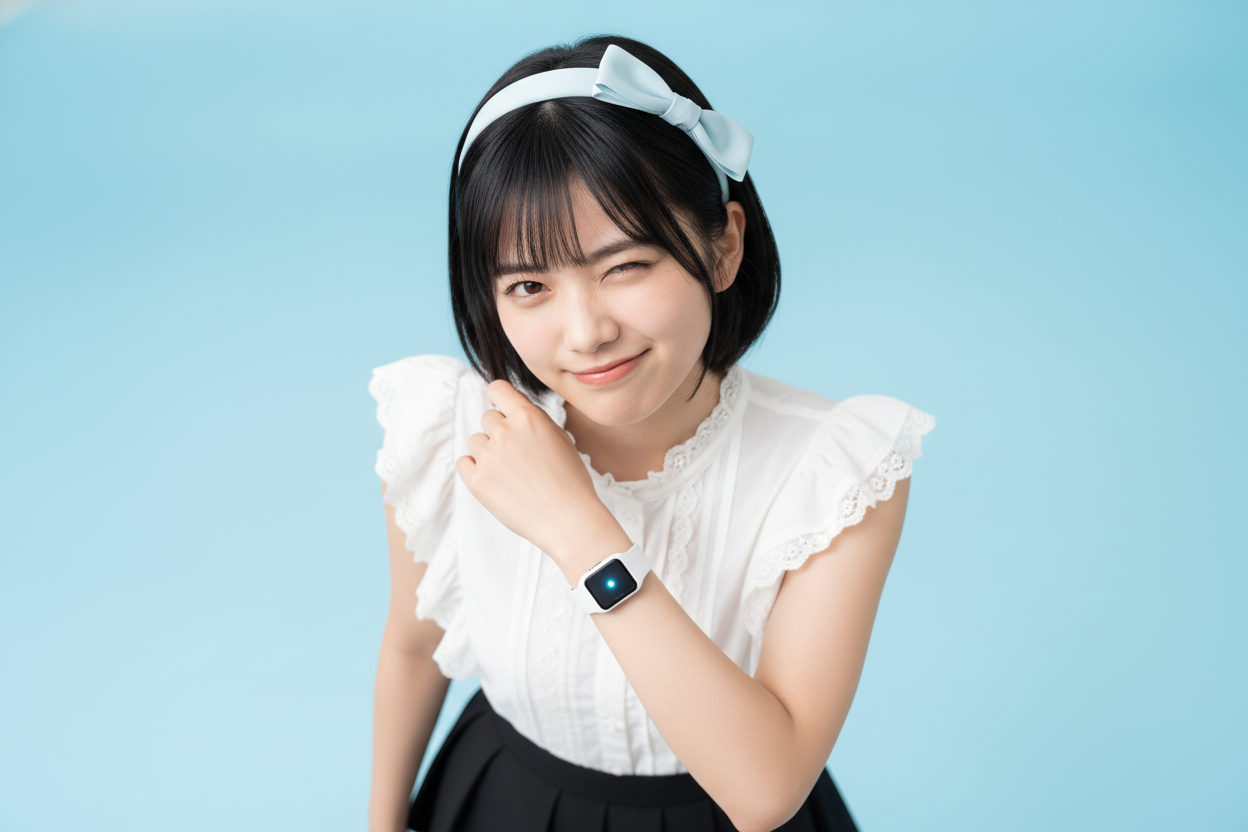
OMG, you guys, have you ever had one of those mornings where you wake up after 8 hours of sleep but feel like you just ran a marathon? 😫 That was me literally every day last month. I was like, “Is it the caffeine? The late-night scrolling? Or is my body just screaming?” In 2025, we were all obsessed with heart rate, but it’s 2026 now, and if you aren’t tracking your cortisol, you’re basically living in the dark ages! Let’s take a closer look at non-invasive cortisol monitoring wearables 2026.
I’ve been obsessed with finding the perfect non-invasive cortisol monitoring wearable because, let’s be real, nobody wants to prick their finger or spit in a tube while sitting at a Starbucks. I spent the last 30 days wearing the latest tech on both wrists (and a finger!) to see which one actually helps me manage my “fast-talking, tech-loving” stress levels. If I get a bit too excited and get the specs mixed up, don’t hate me—wrong if I’m wrong, sorry!💧
- The 2026 Stress Management Revolution: Apple vs. Oura vs. FlowState: non-invasive cortisol monitoring wearables 2026
- Optical Spectroscopy vs. Sweat-Based Sensors: Which is More Accurate?
- My 30-Day Experience: 3 Good Things & One Honest Gripe
- Integrating Cortisol Data with CGM: The 2026 Dashboard
- Verdict: Who is This For?
The 2026 Stress Management Revolution: Apple vs. Oura vs. FlowState: non-invasive cortisol monitoring wearables 2026
- Apple Watch Series 11: Uses new Sub-Dermal Optical Spectroscopy.
- Oura Ring Gen 5: Uses a hybrid of sweat-pore analysis and skin temp.
- FlowState Patch: A semi-disposable sweat-sensing sticker (super niche!).
Honestly, this tech changed my mornings! Before I started tracking, I thought my stress peaked during work meetings. Turns out, my cortisol actually spikes the most when I’m deciding what to watch on Netflix. 😂 Who knew decision fatigue was that real?
For a deeper look at how these global trends are hitting Japan, you should definitely check out ゆずのライフスタイル研究所 for my Japanese-language deep dives on overseas tech!
Optical Spectroscopy vs. Sweat-Based Sensors: Which is More Accurate?
Okay, let’s get a tiny bit nerdy (but not too much, I promise!). The big debate in 2026 is how to measure hormones through skin.
Optical (Apple Style): It shines a special light through your skin to “see” the cortisol molecules in your interstitial fluid. It’s SO convenient because it’s completely dry.
Sweat-Based (Oura/Patch Style): It measures tiny amounts of cortisol in your perspiration. It’s technically more “direct,” but if you have dry skin like me, it can sometimes glitch. 💧
I used the Oura Ring Gen 5 for my morning yoga sessions, and the data was incredibly consistent. It felt like having a tiny life coach on my finger. When my cortisol stayed high, the app actually suggested I skip the espresso and try a matcha instead. It’s those little “feelings-based” nudges that make it worth it!
My 30-Day Experience: 3 Good Things & One Honest Gripe
I’ve been wearing these non-invasive cortisol monitoring wearables 2026 edition for a full month now, and here’s how it actually felt to live with them:
- My mornings got way easier: I stopped forcing myself to do “High Intensity” workouts when my cortisol was already high. I switched to walking, and I actually lost more weight? Nature is wild!
- The “Stress Alert” is a lifesaver: My Apple Watch Series 11 buzzed during a hectic airport run, telling me my levels were in the “Red Zone.” I took three deep breaths, and I swear I didn’t lose my temper at the gate agent. Success!
- Better Sleep Insights: Seeing how my stress from the day carries into my sleep was a total “Aha!” moment.
Integrating Cortisol Data with CGM: The 2026 Dashboard
This is where it gets super cool! In 2026, we’ve finally figured out that blood sugar and stress are best friends. When my cortisol spikes, my glucose usually follows, even if I haven’t eaten a single donut!
I started syncing my cortisol wearable with my Continuous Glucose Monitor (CGM), and seeing that holistic dashboard is addictive. It’s like playing a video game where the main character is ME. If you’re curious about the best CGMs to pair with these, check out the latest fitness tech roundups on my blog!
Verdict: Who is This For?
- The Busy Professional: Go for the Apple Watch Series 11. The integration with your calendar to predict stress before meetings is unbeatable.
- The Biohacker/Minimalist: The Oura Ring Gen 5 is your best bet. It’s discreet, and the 2026 sensor array is remarkably accurate for such a small thing.
- The Athlete: Try the FlowState Patches for short-term, high-intensity monitoring during training blocks.
- Apple Watch Series 11’s cortisol feature is FDA-cleared for “wellness tracking,” not medical diagnosis.
- Oura Ring Gen 5 requires a monthly subscription ($6.99) to access advanced hormonal trends.
- Non-invasive sensors still have a 10-15% variance compared to clinical blood tests (Source: 2025 Wearable Tech Symposium).
I’m so glad we finally have these tools! It makes me feel so much more in control of my body. Just remember, these are tools for better living, not something to get *more* stressed about! If your watch tells you you’re stressed, don’t panic—just take a breath. Anyway, I’m off to go do some “low-cortisol” window shopping! Catch you later! ✨
Disclaimer: I am a tech blogger, not a doctor! These devices are for lifestyle tracking. If you’re feeling seriously unwell, please go see a real human professional! Also, prices and availability on Amazon or Best Buy can change faster than my mood after a double espresso!
}


コメント